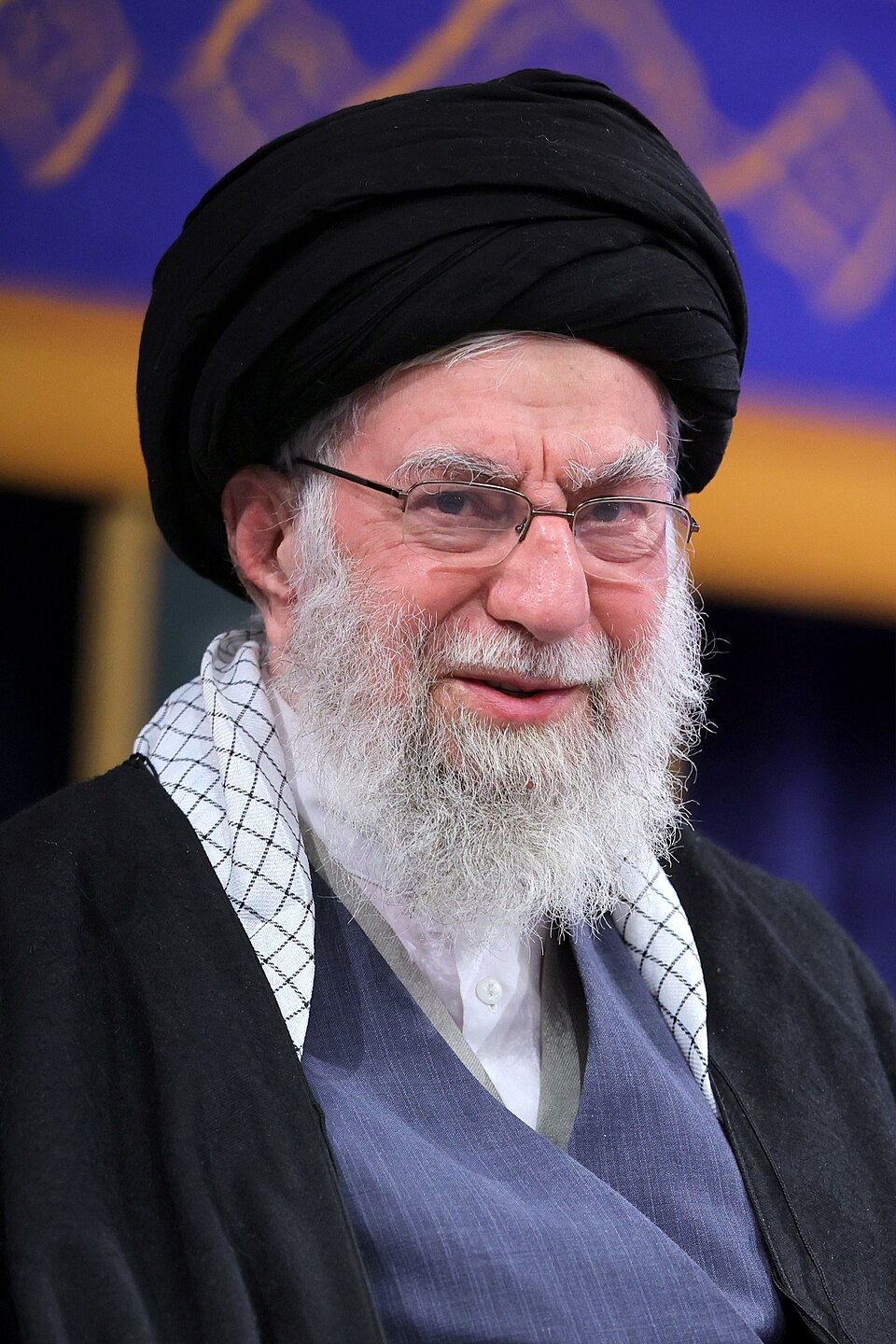
Khamenei's Legacy: Enforcing an Unwanted Regime for Decades
Ayatollah Ali Khamenei's decades-long tenure as Iran's Supreme Leader, succeeding Ayatollah Ruhollah Khomeini in 1989, marks a period of profound transformation and enduring paradox for the Islamic Republic. Tasked with leading a nation born from revolution, Khamenei navigated complex internal and external pressures, consolidating power while simultaneously overseeing the enforcement of an Islamic regime that, by many accounts, had lost the consent of a significant portion of its populace. His rule, characterized by a tight grip on all branches of government and the military, alongside his role as spiritual leader, reveals a pragmatic approach to survival, but also highlights a series of profound Khamenei miscalculations that have shaped Iran’s trajectory and laid the groundwork for future challenges.
The Architect of Enduring Power: A Pragmatist's Grip
Upon assuming the supreme leadership, Khamenei faced a formidable task. He lacked the revolutionary charisma and theological gravitas of his predecessor, Khomeini. To bridge this gap and solidify his authority, Khamenei meticulously built a formidable network of loyalists and allies. This intricate web extended across political, economic, and military spheres, with a particular emphasis on strengthening the Islamic Revolutionary Guard Corps (IRGC).
As commander-in-chief, head of the executive, legislative, and judicial branches, and the nation's ultimate religious authority, Khamenei wielded immense power. However, he was also described by experts like Sanam Vakil of Chatham House as "a bit of a pragmatist," keenly aware of the distribution of power and the necessity of loyalty for the system's survival. His strategy involved hand-picking senior IRGC commanders, shuffling them regularly, and overseeing the Guard's rapid ascent to become Iran's most powerful political and economic institution. This calculated consolidation of power enabled him to maintain control over diverse and often competing political factions for more than three decades, a remarkable feat by any standard.
The Double-Edged Sword: Khamenei's Miscalculations in Sustaining Loyalty
While Khamenei's approach secured his position and the regime's immediate survival, it was predicated on methods that arguably contained inherent Khamenei miscalculations, fostering long-term fragility rather than genuine stability. These missteps often stemmed from the very strategies designed to ensure loyalty and suppress dissent:
- The Illusion of Suppressed Dissent: Khamenei backed the ruthless suppression of political opposition. While this tactic effectively silenced overt challenges in the short term, it profoundly alienated vast segments of the population. Instead of extinguishing dissent, it pushed it underground, deepening resentment and fostering a generational desire for fundamental change. This strategy misjudged the enduring power of popular will and the eventual unsustainability of ruling solely through coercion.
- The Blind Spot of Systemic Corruption: A significant miscalculation was turning a blind eye to pervasive corruption and abuse among his loyalists, particularly within the powerful IRGC. As Sanam Vakil noted, "There's corruption across the whole system." While this toleration secured the loyalty of beneficiaries, it crippled Iran's economy, diverted resources, and severely eroded public trust and the regime's legitimacy. This created a fragile, inefficient state apparatus, fostering public anger that periodically erupted into widespread protests. For a deeper look into this aspect, consider reading Khamenei's Rule: The Blind Spot of Corruption and IRGC Power.
- Underestimating Generational Shifts: Khamenei's rigid enforcement of the Islamic regime's ideology often failed to connect with Iran's increasingly young, educated, and globally connected population. His policies seemed to underestimate the profound generational shift occurring within Iran, leading to a widening chasm between the ruling establishment and the aspirations of its youth. This disconnect fueled persistent unrest and protests, demonstrating that short-term control did not translate into long-term popular acceptance.
- The Cost of Managing Factions: Although Khamenei adeptly managed competing political factions, the continuous concessions and strategic alliances required to maintain their loyalty came at a cost. The growing economic and political influence of groups like the IRGC, while ensuring their allegiance, created powerful, semi-autonomous entities that could potentially challenge the authority of future leaders or exacerbate internal power struggles, thereby planting seeds of future instability within the very system he sought to preserve.
The Nuclear Enigma: A Strategic Gamble or a Profound Miscalculation?
Perhaps one of the most complex areas of Khamenei miscalculations lies in Iran's nuclear program. In 2003, Khamenei issued a fatwa, an indisputable religious edict, forbidding the production, stockpiling, or use of weapons of mass destruction, citing Islamic prohibitions. Yet, simultaneously, he gave implicit backing to the expansion of Iran's nuclear program, which the country's leaders have always maintained is for peaceful purposes, a claim met with widespread skepticism internationally.
This dual approach created a profound paradox. While the nuclear program became a source of national pride for some and a perceived deterrent against external threats, its pursuit led to severe international sanctions and diplomatic isolation. For many Iranians, the economic hardships stemming from these sanctions far outweighed any perceived strategic benefits, intensifying the popular discontent against the regime. Khamenei's strategy here could be seen as a miscalculation of the international community's resolve, and more critically, an underestimation of the domestic toll its consequences would inflict on the very people he governed. To understand this intricate balance, explore Khamenei's Nuclear Paradox: Fatwa and Covert Program Expansion.
The Enduring Shadow of a Protracted Rule: An Unwanted Future
Khamenei's enduring legacy is defined by these profound contradictions. He successfully centralized power and maintained the Islamic Republic's existence for decades against significant odds. Yet, the methods he employed—ruthless suppression, tolerance of corruption, and a defiant stance on issues like the nuclear program—created a system riddled with internal weaknesses and deep public dissatisfaction. The enforcement of an unwanted regime, while successful in the short term, came at the expense of genuine national unity and popular consent.
The institutionalization of his power structures, particularly the IRGC, and the networks of loyalists he cultivated, mean that his approaches and their inherent issues are likely to persist beyond his tenure. The critical question for Iran's future will be whether the next Supreme Leader can address the deep-seated resentments and structural vulnerabilities created by these Khamenei miscalculations, or if the very foundations of the regime will buckle under the weight of accumulated popular discontent and systemic challenges.
In conclusion, Ayatollah Ali Khamenei's leadership will be remembered as a masterclass in political pragmatism and authoritarian resilience. However, his long reign, while securing the survival of the Islamic Republic, was profoundly shaped by crucial miscalculations. These errors—in gauging popular will, managing corruption, and navigating global complexities—have left Iran with a complex legacy of internal division, economic strain, and an enduring struggle for genuine legitimacy, challenges that will undoubtedly define the nation's path forward.