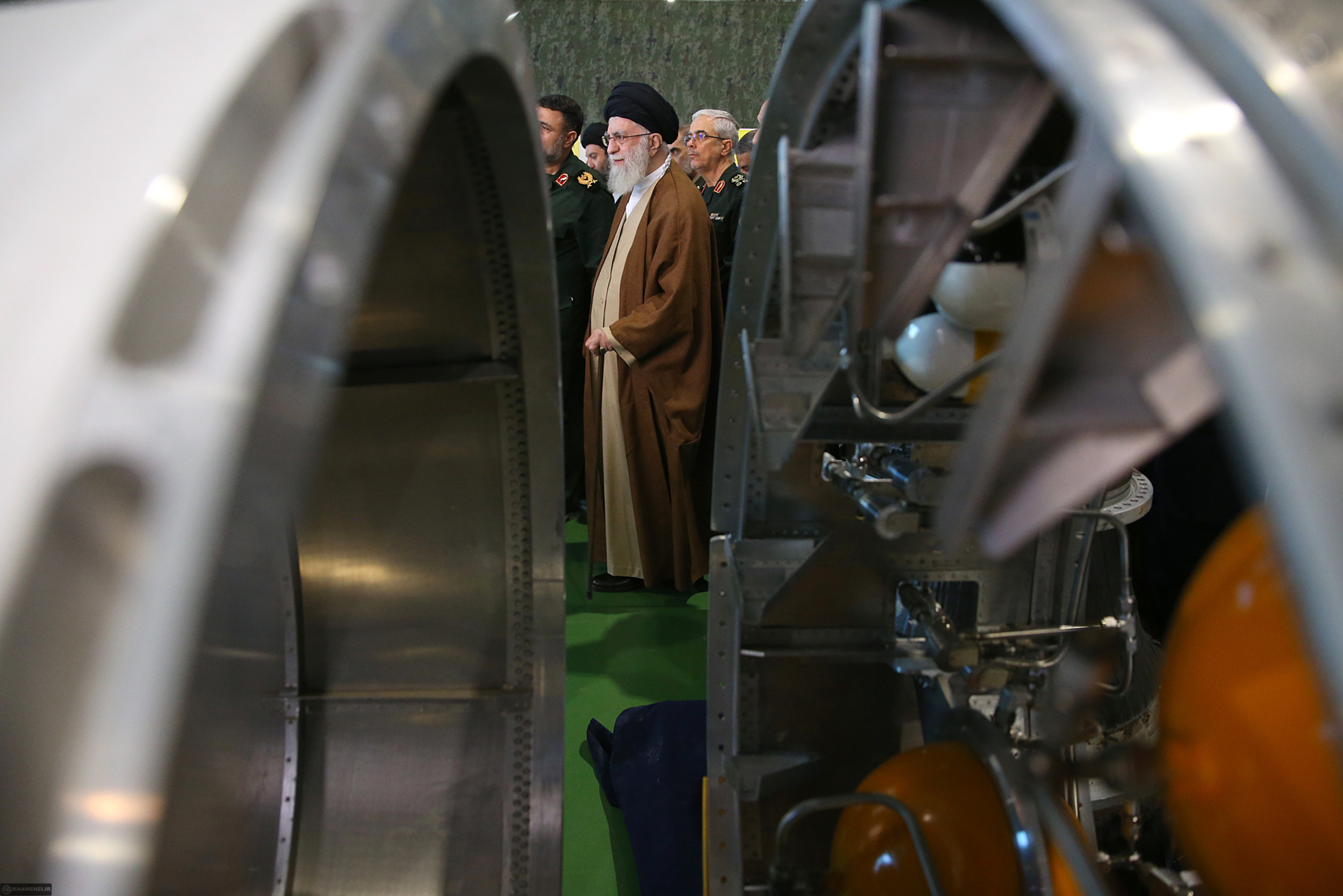
Khamenei's Nuclear Paradox: A Complex Tapestry of Fatwa and Covert Expansion
Ayatollah Ali Khamenei, Iran's Supreme Leader since 1989, has navigated the nation through decades of profound geopolitical shifts, internal dissent, and economic pressures. His rule, inheriting the mantle of Ayatollah Ruhollah Khomeini, has been characterized by a shrewd pragmatism designed to preserve the Islamic Republic. Yet, beneath this veneer of calculated leadership lies a series of contradictions, perhaps none more striking than his stance on nuclear weapons. The pronouncement of a religious fatwa forbidding weapons of mass destruction, juxtaposed against the persistent, covert expansion of Iran's nuclear program, stands as a central illustration of
Khamenei miscalculations that have shaped Iran's international standing and internal stability.
Khamenei, born in Mashhad and educated in Islamic seminaries, rose through the ranks of the 1979 revolution, serving as president before ascending to Supreme Leadership. He inherited a nation grappling with the aftermath of war and revolution, where he meticulously built a network of loyalists, notably within the powerful Islamic Revolutionary Guard Corps (IRGC). This web of allegiance, as noted by experts like Karim Sadjadpour, allowed him to consolidate power despite lacking the singular authority of his predecessor. This pragmatic approach extended to all facets of governance, including the sensitive nuclear dossier, creating a complex legacy fraught with strategic ambiguities and undeniable *Khamenei miscalculations*.
The Architect of Power: Consolidating Control and Suppressing Dissent
To understand the nuclear paradox, one must first grasp the foundations of Khamenei's power. Upon succeeding Khomeini, Khamenei faced the formidable challenge of uniting diverse, often competing, political factions. His solution was to construct a robust system of loyalty, deeply embedding allies across the executive, legislative, and judicial branches, and most crucially, within the military and security apparatus. The IRGC, in particular, became a cornerstone of his authority, evolving under his oversight into Iran's most formidable political and economic institution. He actively handpicked its senior command, ensuring their fidelity through regular rotations and preferential treatment.
This intricate power structure, while effective in maintaining control for over three decades, came at a significant cost. Khamenei's unwavering support for the ruthless suppression of political dissent and his deliberate blindness to widespread corruption and abuse within his trusted circles, especially the IRGC, created a deep chasm between the regime and the populace. Sanam Vakil of Chatham House describes him as a "pragmatist" who understood the necessity of loyalty for the system's survival, even if it meant alienating the majority of Iranians who no longer desired the enforced Islamic regime. While this strategy successfully preserved the regime, it sowed seeds of deep-seated resentment and instability, representing a long-term
Khamenei miscalculation in gauging the true pulse of the nation and fostering genuine legitimacy. For a deeper dive into this aspect of his rule, consider
Khamenei's Legacy: Enforcing an Unwanted Regime for Decades.
The Nuclear Fatwa: A Religious Edict or a Strategic Veil?
The core of Khamenei's nuclear paradox manifested in 2003 when he issued a *fatwa* – an indisputable religious edict – explicitly forbidding the production, stockpiling, or use of weapons of mass destruction, citing their prohibition by Islam. This declaration was widely publicized, aimed at projecting Iran as a responsible nation adhering to religious principles and denying any ambition for nuclear weaponry. On the surface, it appeared to be a definitive moral and religious stance against an existential threat.
However, almost simultaneously with this public shunning of WMDs, Khamenei gave his implicit backing to the significant expansion of Iran's nuclear program. While Iranian leaders have consistently, and often unconvincingly, maintained that their program is solely for peaceful energy and medical purposes, the international community has largely viewed this expansion with deep suspicion. The duality of the *fatwa* and the covert program expansion represents a critical
Khamenei miscalculation in managing international perceptions. The world struggled to reconcile a religious leader's absolute prohibition with a state's determined pursuit of the very capabilities that could lead to such weapons. This ambiguity fueled distrust, intensified international scrutiny, and laid the groundwork for severe sanctions, demonstrating a misjudgment in his ability to control the narrative and avert global alarm.
The Strategic Ramifications of Khamenei's Nuclear Gambit
The paradoxical approach to Iran's nuclear program has had profound and far-reaching strategic ramifications, both domestically and on the global stage. Internationally, it has positioned Iran as a perennial point of contention, leading to prolonged negotiations, significant diplomatic efforts like the Joint Comprehensive Plan of Action (JCPOA), and recurrent crises. When the JCPOA, designed to curb Iran's nuclear activities in exchange for sanctions relief, faced setbacks and the US withdrew, Iran rapidly escalated its program, further confirming international fears. This cyclical pattern of escalation and negotiation, often punctuated by accusations of deception, can be directly attributed to the initial ambiguity created by the *fatwa* and the covert program.
Economically, the persistent international pressure and sanctions, directly linked to concerns over Iran's nuclear ambitions, have severely crippled the Iranian economy. The inability to fully access global markets, coupled with restrictions on critical industries, has led to widespread public hardship. Khamenei's belief that he could pursue a dual strategy without incurring crippling economic costs represents another significant
Khamenei miscalculation. Domestically, resource allocation prioritised the nuclear program and regional proxies over essential public services and economic development, contributing to growing public discontent and frequent anti-regime protests. The costs associated with this high-stakes nuclear gambit have been immense, reflecting a fundamental misjudgment of the balance between nationalistic aspirations and the welfare of his own people.
Beyond the Nuclear Question: Other Khamenei Miscalculations
While the nuclear paradox is a stark example,
Khamenei miscalculations extend beyond this singular issue, touching upon broader aspects of his governance and the stability of the Islamic Republic. One significant area is the regime's long-term internal legitimacy. Despite his decades-long efforts to keep powerful factions loyal, the fundamental miscalculation was believing that sustained suppression of dissent could substitute for genuine popular consent. The increasing number and intensity of protests over issues ranging from economic hardship to women's rights underscore a deepening alienation between the state and its citizens. The regime's reliance on institutions like the IRGC to enforce its will, while effective in the short term, has eroded public trust and created a brittle system susceptible to internal pressures. To explore this dynamic further, see
Khamenei's Rule: The Blind Spot of Corruption and IRGC Power.
Furthermore, the uncertainty surrounding Khamenei's succession, particularly as he aged, highlights a potential miscalculation in ensuring a smooth and stable transition of power. While the Guardian Council is tasked with selecting the next Supreme Leader, the lack of a clear, universally accepted successor risks creating a power vacuum and exacerbating existing factional rivalries, potentially leading to instability. His focus on maintaining an iron grip, rather than cultivating a widely respected, consensus-based successor, could prove to be a critical strategic oversight with profound long-term consequences for the future of the Islamic Republic.
Ultimately, the cumulative effect of these strategic errors, from the nuanced handling of the nuclear question to the broad-stroke approach to internal dissent and economic management, paints a complex picture of a leader whose pragmatism, while ensuring survival, also laid the groundwork for significant challenges and persistent instability.
Conclusion
Ayatollah Ali Khamenei's tenure as Iran's Supreme Leader is a testament to his strategic acumen in maintaining power, but it is also a study in profound contradictions and consequential
Khamenei miscalculations. The nuclear paradox, where a religious edict forbidding WMDs coexisted with the covert expansion of Iran's nuclear program, stands as a prime example of his high-stakes gambit to navigate international pressures while preserving national capabilities. This dual approach, while perhaps intended to offer plausible deniability, ultimately bred distrust, inviting severe international scrutiny and crippling sanctions that disproportionately affected the Iranian populace. Beyond the nuclear question, his reliance on loyalists, suppression of dissent, and apparent blind eye to corruption represent misjudgments in securing long-term legitimacy and popular support. As Iran looks towards an uncertain future, the legacy of these miscalculations will undoubtedly continue to shape its trajectory, domestically and on the global stage.