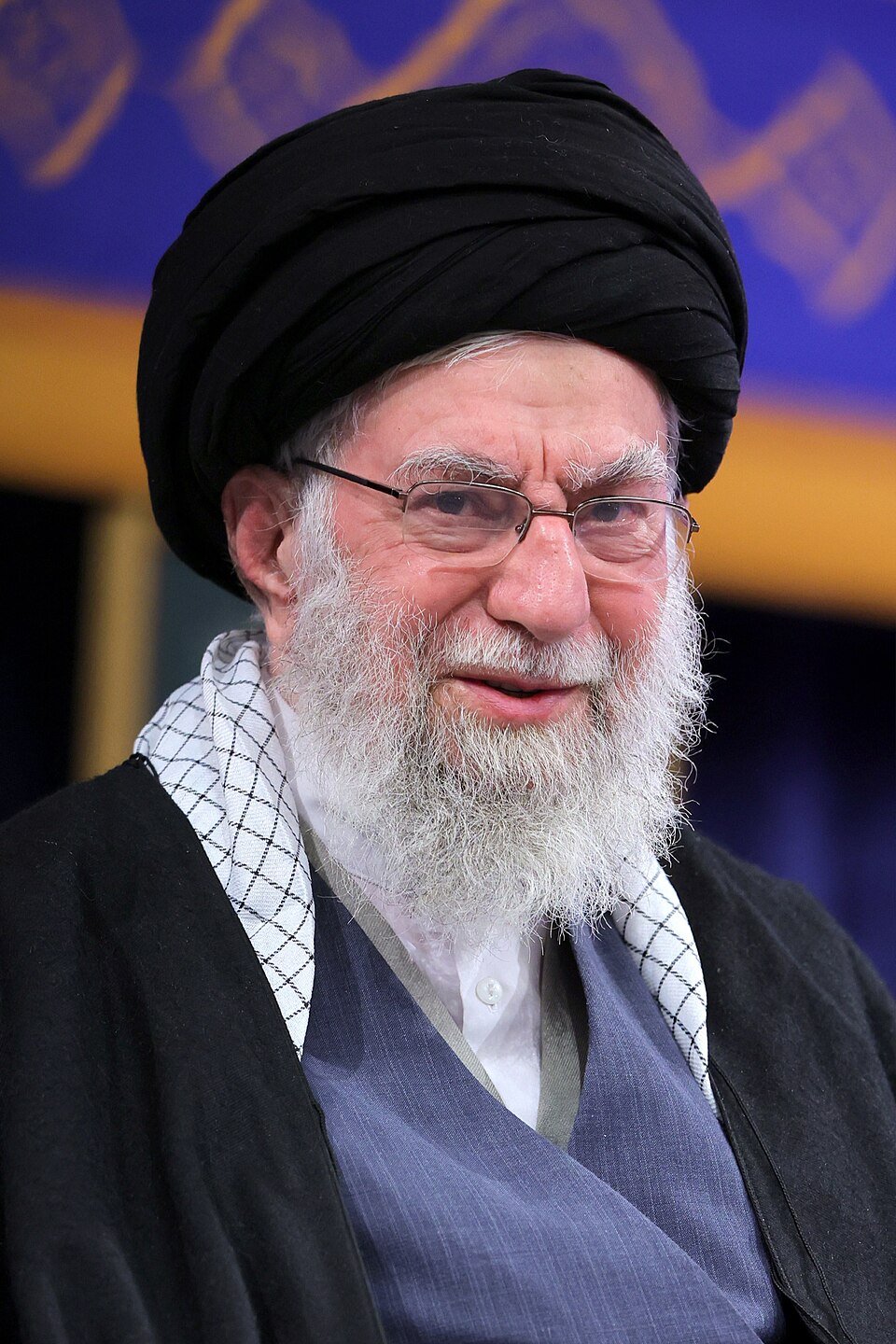
Khamenei's Rule: The Blind Spot of Corruption and IRGC Power
Ayatollah Ali Khamenei's tenure as Iran's Supreme Leader, spanning over three decades since 1989, has been defined by an intricate web of power consolidation, strategic maneuvering, and persistent internal challenges. Succeeding the revolutionary leader Ayatollah Ruhollah Khomeini, Khamenei ascended to a position of immense authority, controlling all branches of government and the military, and serving as the nation's spiritual guide. While his long reign showcased a remarkable ability to maintain loyalty amidst competing factions, it also exposed significant blind spots – particularly concerning rampant corruption and the unchecked growth of the Islamic Revolutionary Guard Corps (IRGC) – which could be seen as profound
Khamenei miscalculations with lasting repercussions for Iran's stability and future.
Despite his position of ultimate authority, accountable only to God within Iran's hierarchy, Khamenei operated within a complex political landscape, often acting as a pragmatic mediator among powerful groups. His key strategy for survival and perpetuation of the Islamic regime involved securing unwavering loyalty. This pragmatism, however, frequently came at a steep cost, manifesting in crucial decisions that may be viewed in hindsight as significant strategic misjudgments. The institutionalization of corruption and the disproportionate empowerment of the IRGC stand out as two such areas where short-term stability appeared to trump long-term national well-being.
The Unseen Costs of Centralized Loyalty: Corruption as a Systemic Flaw
One of the most significant
Khamenei miscalculations was his apparent willingness to turn a blind eye to pervasive corruption and abuse among his loyalists. While securing allegiance was paramount for maintaining the Islamic regime, this approach inadvertently allowed systemic corruption to fester and deepen its roots across the entire governmental apparatus. Experts like Sanam Vakil of Chatham House describe Khamenei as a "pragmatist" who understood the necessity of loyalty for the system's survival. However, this pragmatism translated into an acceptance, or at least a tolerance, of illicit financial gains and power abuses by those he relied upon most heavily.
The consequences of this blind spot are far-reaching. Corruption has eroded public trust, fueled widespread discontent, and hampered economic development. Resources that could have been invested in infrastructure, social welfare, or industrial growth have instead been diverted into the pockets of a privileged few, often with direct or indirect ties to the ruling elite or powerful institutions. This unchecked financial impropriety has not only delegitimized the regime in the eyes of many ordinary Iranians but has also created powerful vested interests that resist any reform efforts. For more on the endurance of his rule despite public sentiment, consider reading
Khamenei's Legacy: Enforcing an Unwanted Regime for Decades. The long-term stability of a nation cannot be sustained purely on loyalty bought at the expense of widespread injustice and economic disparity. Such systemic flaws, allowed to flourish under the Supreme Leader's watch, represent a critical area of
Khamenei miscalculations, potentially sowing the seeds of future instability.
The IRGC's Ascent: A Double-Edged Sword for Khamenei's Power
Perhaps the most potent example of a strategic
Khamenei miscalculation involves his cultivation and empowerment of the Islamic Revolutionary Guard Corps. Lacking the individual authority and charismatic appeal of his predecessor, Ayatollah Khomeini, Khamenei strategically built a vast network of allies and cronies to bolster his grip on power. Senior figures within the IRGC became indispensable components of this network. Karim Sadjadpour, author of "Reading Khamenei," notes that the Supreme Leader "handpicks the organization's senior command and shuffles them regularly," meticulously overseeing the Guards' rapid ascent.
Under Khamenei, the IRGC transcended its initial military role, evolving into Iran's most powerful political and economic institution. Its influence now pervades key sectors, including defense, intelligence, construction, energy, and finance. While this expansion undeniably solidified Khamenei's control by providing a loyal and capable enforcement arm, it also created a formidable power bloc that now rivals, and sometimes overshadows, traditional governmental bodies. This has led to:
- Economic Dominance: The IRGC's vast business empire operates with little transparency and often enjoys preferential treatment, stifling private sector growth and fair competition.
- Political Clout: Its deep penetration into all levels of governance means that few significant decisions can be made without its input or approval.
- Internal Security Mandate: The IRGC has been instrumental in the ruthless suppression of political dissent, further alienating a significant portion of the population.
- A State Within a State: Its self-sufficiency and independent power base mean that any future leader or reformist movement might find it exceedingly difficult to rein in its influence.
The decision to grant the IRGC such extensive autonomy and control, while effective in short-term power consolidation, might prove to be a profound strategic
Khamenei miscalculation. It has created an entrenched entity whose interests may not always align with the broader national interest, and whose power could potentially complicate succession or future governance.
The Nuclear Paradox: A Strategic Miscalculation or Calculated Ambiguity?
Another area where Khamenei's decisions have invited scrutiny as potential
Khamenei miscalculations lies in Iran's nuclear program. In 2003, he issued a fatwa, an indisputable religious edict, forbidding the production, stockpiling, or use of weapons of mass destruction, citing Islamic prohibitions. This public declaration was ostensibly aimed at reassuring the international community about Iran's peaceful nuclear intentions.
However, concurrently, Khamenei gave his implicit backing to the expansion of Iran's nuclear program, which the country's leaders have always maintained, often unconvincingly to international observers, is solely for civilian energy purposes. This duality – a public religious prohibition coupled with a sustained, and at times covert, acceleration of nuclear capabilities – created a profound paradox. The international community largely perceived this as a lack of transparency and a fundamental breach of trust, leading to escalating sanctions, diplomatic isolation, and heightened regional tensions.
Was this a deliberate strategy of calculated ambiguity, intended to keep Iran's options open and exert leverage? Or was it a strategic
Khamenei miscalculation that underestimated the resolve of the international community and the severe economic consequences of protracted confrontation? The pursuit of nuclear technology under such opaque circumstances has subjected Iran to immense economic pressure, stifled its global integration, and presented ongoing security challenges. This ongoing tension, and its detrimental impact on the Iranian populace, suggests that the balance struck here may not have been the optimal long-term strategic choice. For a deeper dive into this complex issue, explore
Khamenei's Nuclear Paradox: Fatwa and Covert Program Expansion.
The Erosion of Public Trust: A Fundamental Miscalculation of the People's Will
Perhaps the most fundamental of
Khamenei miscalculations lies in the sustained enforcement of an Islamic regime that, by many accounts, the majority of Iranians no longer desire. Throughout his rule, Khamenei consistently backed the ruthless suppression of political dissent. While this strategy successfully quashed immediate challenges and maintained a semblance of order, it came at the cost of widespread alienation and a deep erosion of public trust.
The disconnect between the ruling establishment and the aspirations of a young, increasingly globalized population has only widened over decades. The reliance on force to maintain control, coupled with the systemic corruption and economic hardship, has fostered deep resentment. This approach, prioritizing ideological purity and regime survival through suppression over genuine national reconciliation and popular legitimacy, can be seen as a grave
Khamenei miscalculation concerning the long-term viability and stability of the Islamic Republic. A state that constantly relies on coercion to govern its own people faces inherent vulnerabilities and fosters cycles of protest and repression that ultimately undermine its foundations.
Conclusion
Ayatollah Ali Khamenei's long and impactful rule has undeniably reshaped Iran. While he demonstrated remarkable skill in navigating internal power struggles and ensuring the survival of the Islamic Republic, his tenure is also marked by critical blind spots. The institutionalization of corruption, the disproportionate empowerment of the IRGC, the paradoxical nuclear strategy, and the suppression of popular will represent significant
Khamenei miscalculations. These decisions, made perhaps out of a pragmatic necessity to maintain loyalty and power in the short term, have created deeply entrenched structural issues that will inevitably impact Iran's future. The legacy of these misjudgments will continue to shape the challenges faced by any successor and will determine the trajectory of a nation grappling with its past and uncertain future.